10 Simple Ways to Make Your Home Feel Calmer
Share
Small changes that can make your everyday surroundings feel quieter, softer, and a little easier to live in.
Your home doesn’t have to be perfectly clean, beautifully decorated, or completely clutter-free to feel peaceful.
In fact, trying to maintain that kind of perfection can create its own kind of stress.
A calm home is less about how it looks in a photograph and more about how it feels to live there.
Can you find the things you need? Is there somewhere comfortable to sit? Are there a few surfaces that aren’t covered in stuff? Does walking into your bedroom at night make you feel like you can finally exhale?
You don’t need a major decluttering project or a home makeover to get closer to that feeling.
Start with a few small things.
1. Clear one surface completely
You don’t have to declutter your whole house.
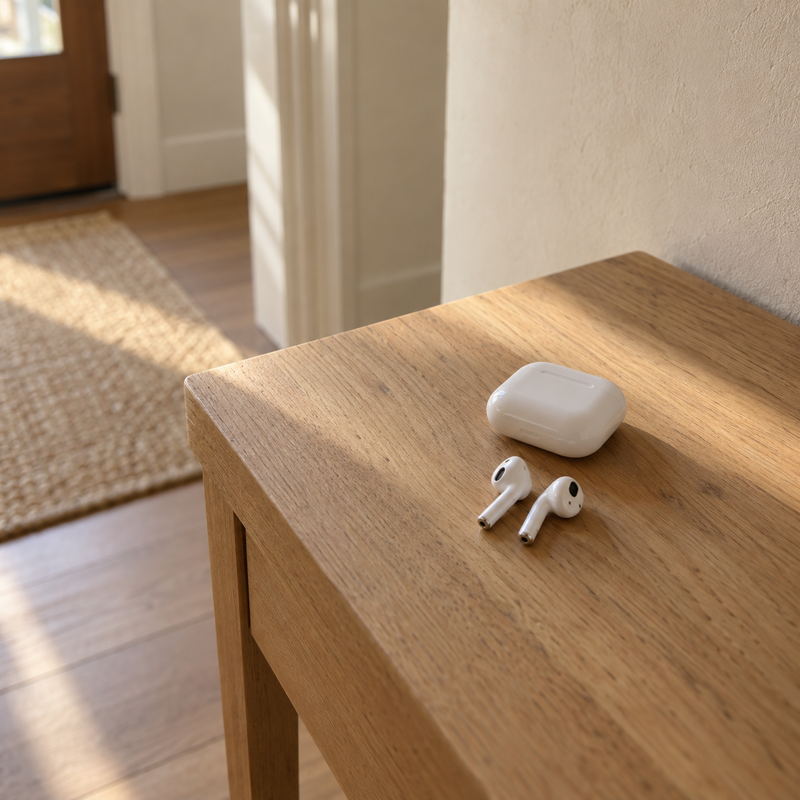
Choose one surface you see frequently—a kitchen counter, coffee table, bathroom vanity, nightstand, or entryway table—and clear it.
Put away anything that already has a home. Find a home for anything that doesn’t. Throw away the obvious trash.
Then resist the temptation to immediately decorate the newly empty space.
Leave some of it empty.
Visual breathing room can make an entire room feel calmer, even when plenty of ordinary life is still happening around it.
2. Create a landing place for the things you carry home
Keys on the counter. Mail on the table. Sunglasses on the bookshelf. A bag on the floor.
Individually, these things don’t seem like clutter. But when everyday objects don’t have obvious places to go, they slowly create visual noise throughout the house.
Create one small landing zone near the entrance.
It might include a bowl for keys, a hook for your bag, a basket for incoming mail, and a designated place for shoes.
The goal isn’t to create an elaborate organizing system.
It’s simply to make putting things away easier than dropping them somewhere else.
3. Pay attention to your lighting
Overhead lighting is useful.
It is not always relaxing.
In the evening, try turning off some of the brightest lights and using lamps instead.
A small table lamp in the kitchen, a reading lamp beside the sofa, or a warm bedside light can completely change the feeling of a room.
You can also make the most of natural light during the day. Open the curtains. Pull up the blinds. Move something that’s blocking a window.
Light affects how a space feels more than almost any decorative object you can buy.
4. Give your eyes somewhere quiet to rest
Look around the room you’re sitting in.
Is every surface filled?
Are there lots of labels, cords, packages, papers, toys, appliances, or colorful objects competing for attention?
You don’t necessarily need to get rid of them.
Sometimes you simply need to contain them.
A basket can hold the chargers. A cabinet can hide the brightly colored packages. A tray can make several small bathroom products read visually as one group instead of ten separate objects.
And some spaces can simply stay empty.
Your eyes need places to rest, too.
5. Make one everyday ritual nicer
Think about something you already do every day.
Making coffee.
Taking a shower.
Getting ready for bed.
Sitting down to work.
Instead of adding another habit to your life, make one of those existing moments a little more pleasant.
Put your favorite mug somewhere easy to reach. Keep a nice hand cream beside the sink. Make your bed comfortable enough that you’re genuinely happy to get into it. Put a small lamp beside the chair where you drink your morning coffee.
Tiny pleasures matter because you encounter them again and again.
6. Reduce the amount of stuff that’s asking something from you
Some clutter isn’t simply visual.
It’s unfinished business.
The library books need to be returned. The package needs to be mailed. The broken lamp needs to be repaired. The clothes need to be donated. The stack of papers needs to be sorted.
Every time you see these things, they quietly remind you that you haven’t dealt with them yet.
Choose one.
Finish it.
Then choose another tomorrow.
A calmer home isn’t necessarily a home with fewer possessions. Sometimes it’s simply a home with fewer unresolved decisions sitting around.
7. Make it easy to reset the room
Notice where clutter naturally accumulates in your home.
Instead of repeatedly getting annoyed with yourself—or everyone else—for leaving things there, ask why it keeps happening.
Maybe blankets pile up beside the sofa because there’s nowhere convenient to put them.
Maybe clothes land on the bedroom chair because the hamper is across the room.
Maybe papers collect on the kitchen counter because that’s where everyone naturally opens the mail.
Work with those patterns.
Put the basket where the blankets actually end up. Move the hamper. Give the papers a tray.
Good organization often means putting the solution where the problem already happens.
8. Bring in something from outside
A room can feel noticeably softer with something natural in it.
That doesn’t have to mean buying expensive bouquets every week.
Clip a branch from the yard. Put herbs in a little pot on the windowsill. Bring home a few flowers from the grocery store. Grow a houseplant. Fill a bowl with lemons or seasonal fruit.
Even opening a window for a few minutes can change the atmosphere of a room.
Homes feel good when they don’t feel completely sealed off from the world outside them.
9. Do a ten-minute evening reset
Set a timer for ten minutes before you settle in for the night.
Don’t try to clean the whole house.
Just reset it.
Put dishes in the kitchen. Fold the blanket on the sofa. Put shoes away. Wipe the counter. Throw away the scraps of paper that accumulated during the day.
Focus especially on the areas you’ll see first tomorrow morning.
Ten minutes won’t create a spotless house.
But waking up to yesterday’s mess feels very different from waking up to a room that’s mostly ready for a new day.
10. Stop trying to make your home look like nobody lives there
A peaceful home still has evidence of people.
There may be a book beside the sofa because you’re reading it.
There may be children’s artwork on the refrigerator.
There may be shoes by the door, a half-finished puzzle on the table, a blanket someone actually uses, or a mug beside the chair where you drink your coffee.
Those things aren’t necessarily clutter.
They’re life.
The goal isn’t to remove every visible possession. It’s to remove enough unnecessary noise that the meaningful things have room to exist.
A calmer home, little by little
You don’t have to spend an entire weekend reorganizing your house.
You don’t need matching containers.
You don’t need a new sofa.
And you definitely don’t need to wait until your home is “finished” before you can enjoy living in it.
Clear one counter.
Turn on a lamp.
Open a window.
Put away five things.
Make tomorrow morning slightly easier.
Then enjoy your home exactly where it is today.
A peaceful home isn’t something you finally achieve.
It’s something you create in small moments, over and over again.